Short on time? Get the quick version.



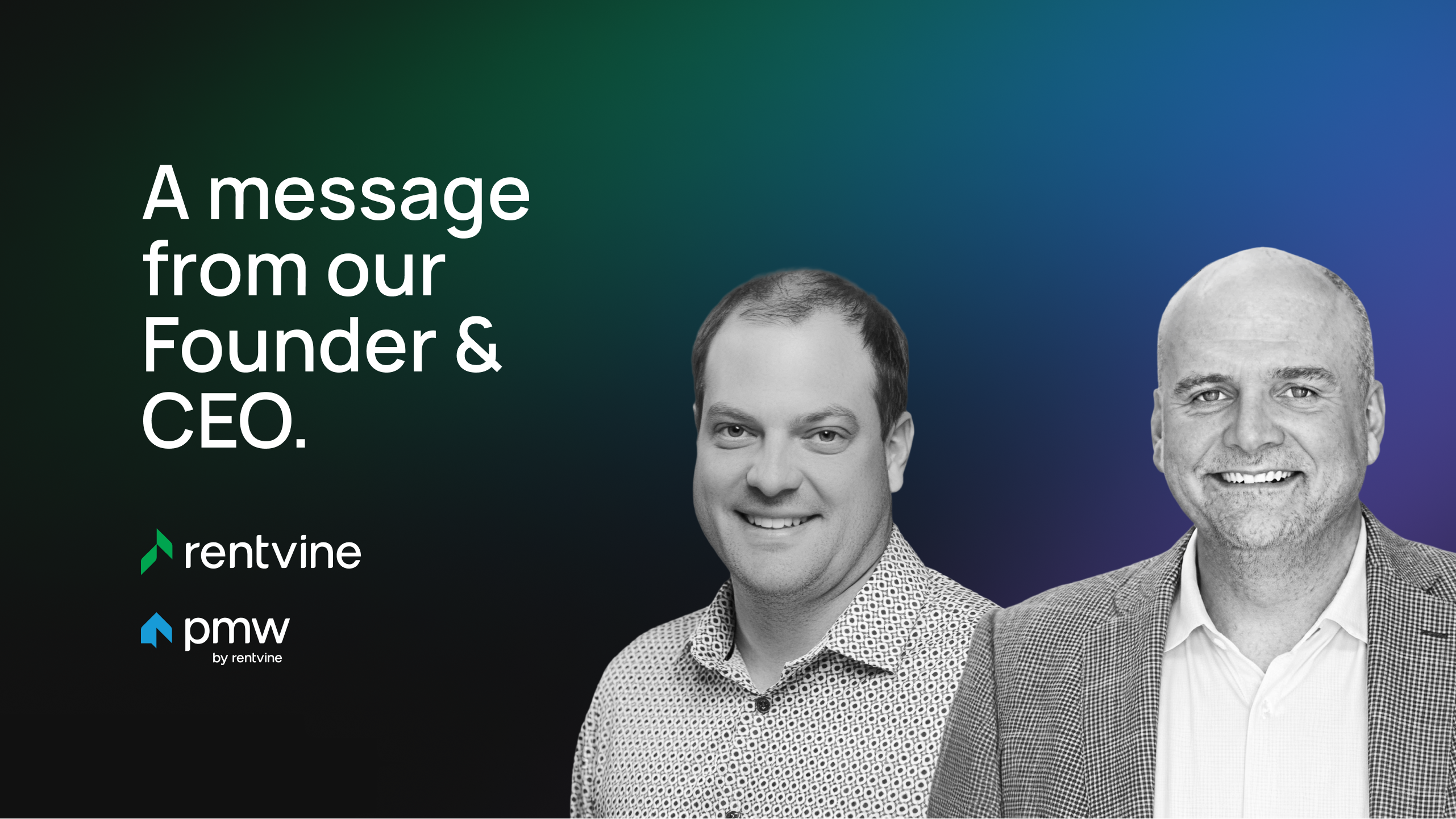
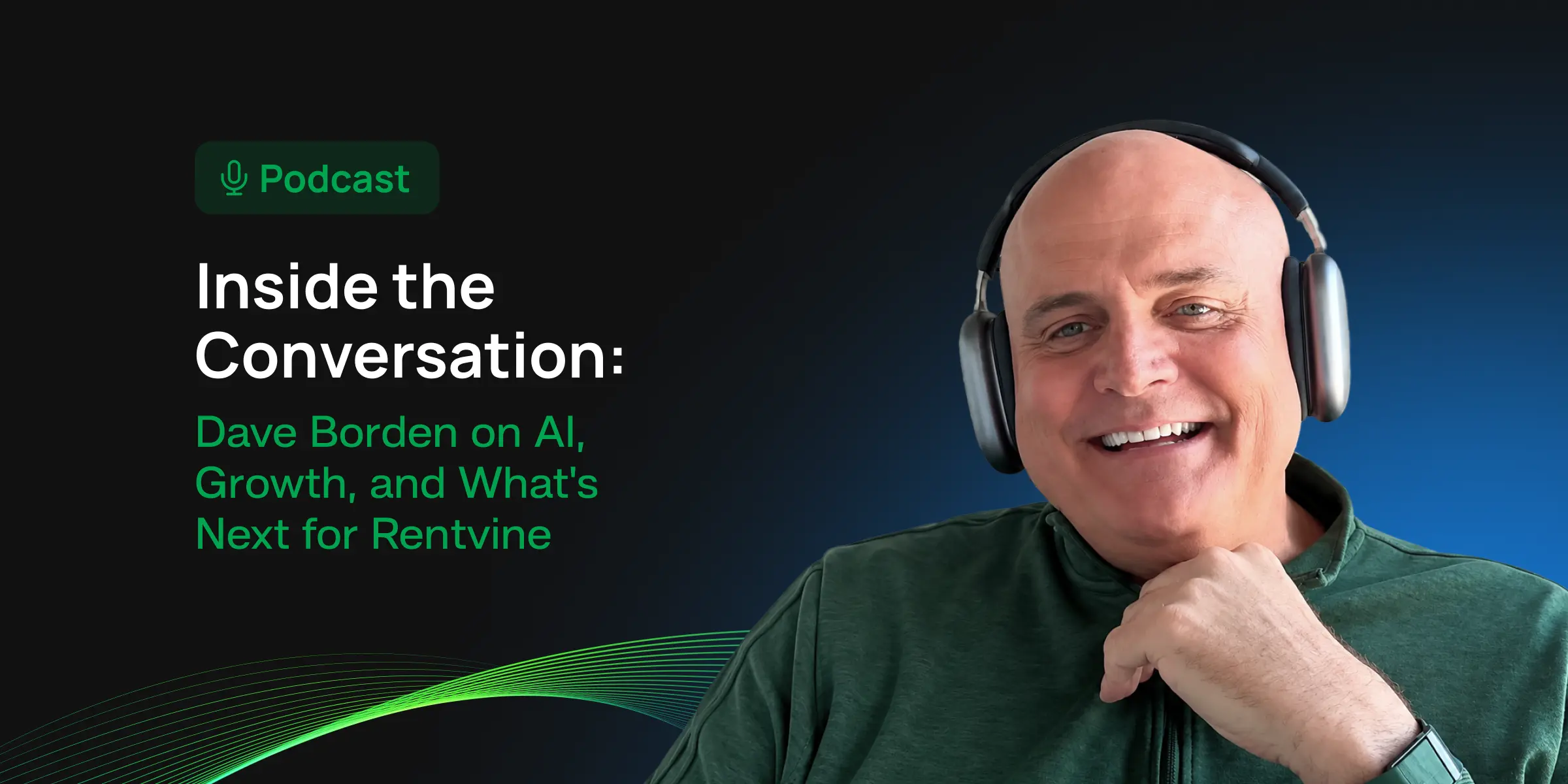
Rentvine founder Dave Borden joined Peter Lohmann on Peter Lohmann's Podcast for "Inside Rentvine's Bet on Open Data," an hour that covered a lot of ground: where Rentvine's growth actually stands, why the company bet on an open API years before anyone cared about AI, what's coming next on the product side, and how Dave thinks about the shrinking market for self-managing landlords. The conversation also touched on Rentvine's sponsorship of the 2026 PM Trends Report, which Peter co-produces. The episode was published September 10, still billing Dave as CEO. Rentvine has since named Nat Kunes as CEO, with Dave moving into the Founder and board member role.
Here's how the conversation went.
"Ahead of Plan"
Peter opened by asking how many doors Rentvine is managing now. Dave wouldn't give a number (he joked that he's "not allowed to say"), but he said the company is running ahead of its own internal growth targets, with the bulk of that growth coming from what he called the "narrow" property manager: single-family homes, a few duplexes and fourplexes, some light commercial. Peter, who tracks the space closely through his own surveys, said the growth shows up clearly in his data too, and that Rentvine has pulled well ahead of where it used to run neck and neck with Buildium. Rentvine's own customer case studies tell a similar story from the ground up, companies scaling fast after switching platforms.
Dave's explanation for the growth was blunt: AI. Not because Rentvine saw it coming years ago, he was quick to say he didn't, but because the company's long-standing decision to keep its API fully open turned out to be exactly the right foundation for the AI moment the industry is now in.
Why the Open API Bet Predates the AI Hype
This was the thread Dave kept returning to. Rentvine built its API open from early on, well before ChatGPT existed, on the reasoning that property managers are paying for their own data and Rentvine has no business holding it hostage. That philosophy is also why the platform supports a wide range of third-party integrations without gatekeeping. Dave compared the current shift to the earlier one from on-premise software to the cloud: he thinks Rentvine's architecture puts it in the same advantaged position now, but for AI.
He was candid that this openness cuts both ways. Rentvine doesn't block competitors from building integrations against its API, even when those integrations compete directly with Rentvine's own tools. Dave's view: if a customer wants something better than what Rentvine builds, the answer is to build a better product, not put up a fence.
What's Coming: A New Maintenance Agent and an MCP in Beta
Peter asked what's newest on the product side. Dave talked about a second maintenance agent in development, one meant to sit alongside the existing Fixie triage tool and handle a much larger share of a maintenance coordinator's actual workload (he floated a rough internal name during the conversation that hadn't been finalized publicly at the time). He framed it as a tool that could let smaller shops skip hiring a maintenance coordinator altogether, and let bigger ones manage more doors without adding headcount.
He also talked at length about Rentvine's MCP, which was in beta with around 80 customers at the time of the interview. Dave was refreshingly direct about why it hasn't opened wider: giving outside AI tools a direct line into a system that holds owner and tenant banking information is genuinely risky, and Rentvine isn't willing to let customers take on that risk even if they'd volunteer to. Certain endpoints, payment data and most of accounting, are staying locked down while the company works through the security implications.
How Dave Thinks About Charging for This Stuff
Peter pushed on pricing, and Dave laid out more of a philosophy than a price sheet. Rentvine's stated preference is to make money from things other than the core subscription, revenue share on insurance, screening, and similar products property managers already buy elsewhere, rather than tacking on price increases. Applied to the new AI tools: the maintenance agents will most likely be a paid add-on, since Dave sees them as delivering clear, chargeable value. Whether the MCP itself gets a price tag was still an open question at the time of the interview. (Rentvine's current pricing doesn't reflect these tools yet, so it's worth checking back as they roll out.)
Communication and Accounting Are Both Still "Coming"
Two topics came up as clear work in progress, with no timeline attached to either. On communication, Dave admitted this is a real weak spot for Rentvine and, in his view, for the whole category. The direction under discussion is a unified inbox paired with AI assistance rather than a purely interface-driven fix.
On accounting, Dave said the next wave of agents will be built around the accounting services team Rentvine picked up through its 2024 acquisition of Bynnd, likely two to three agents in total. He was upfront that this is sensitive territory, given the trust accounting rules property managers answer to in every state, a rulebook Rentvine's trust accounting system is built around from the ground up, and said the bar is matching or beating human accuracy before Rentvine expands what these agents are allowed to touch.
Growth Channels and Scaling Support
Asked what's actually driving new business, Dave pointed first to trade shows and Rentvine's own user conference, both of which he credited to the company's culture as much as its product. He also brought up SEO and what he called "AIO," showing up in AI-generated answers the way Rentvine and PMW customers already show up in search, naming CMO Chris Brasher and VP of Sales Beau Brooks as the people leading that work.
On support, Dave described deliberately staffing ahead of current volume rather than current headcount, planning for the growth curve he expects rather than the one he's currently living, so the team isn't caught short if a big customer switches over all at once.
Where Self-Managing Landlords Fit In
The conversation closed on a bigger-picture question: Turbo Tenant's acquisition of Tenant Cloud and its push into tools for self-managing landlords. (Peter, incidentally, had TurboTenant's CEO Seamus Nally on the show a few weeks after this episode.) Dave drew a firm line between that market and the professional operators Rentvine is built for. He mentioned that Rentvine recently stopped onboarding new customers with 30 units or fewer, with exceptions for experienced operators coming over from larger portfolios, since that segment needs disproportionate support relative to what it pays. He also predicted the self-managing landlord segment will keep shrinking as landlords realize how much risk they're carrying compared to professional managers with larger, more diversified portfolios.
For more on Dave's transition to Founder, see Rentvine's next chapter and a letter from Rentvine's Founder.
Ready to see what's behind Rentvine's approach to AI and open data? Book a demo.